

Open a bond quote and you’ll see a price like 98, 100, or 103. That number tells you everything about how the market feels about a bond compared to its coupon.
When the price lands exactly on 100, you’re looking at a par bond, and understanding why it got there tells you more about interest rates than the price alone ever could.
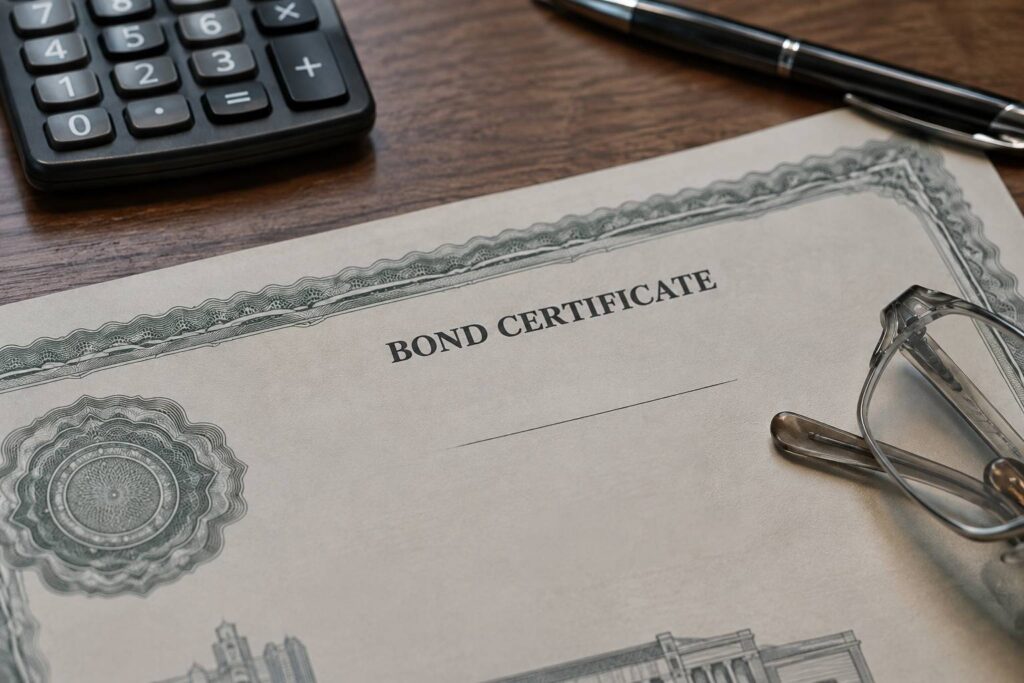
A par bond is a bond currently trading at exactly its face value, meaning its coupon rate matches the prevailing market interest rate for bonds of similar risk and maturity. If a bond has a $1,000 face value and it’s selling for $1,000, it’s trading at par, quoted at 100. Nothing more, nothing less.
This differs from a bond’s par value, which is simply the fixed amount printed on the certificate and repaid at maturity. Par bond value never moves. Whether a bond trades at par is a separate question that depends entirely on where market rates sit relative to the coupon.
A bond’s price is the present value of its future cash flows, the coupons plus the principal, discounted at the market’s required rate of return. When the discount rate used by investors equals the bond’s own coupon rate, the math works out so that the present value equals the face value. That’s the entire mechanism behind par bond pricing.
Three outcomes are possible:
| Coupon rate vs. market rate | Bond trades at | Investor logic |
| Coupon = market rate | Par (100) | The bond already pays what the market demands |
| Coupon < market rate | Discount (below 100) | Buyers pay less to make up for the weaker coupon |
| Coupon > market rate | Premium (above 100) | Buyers pay more for the above-market income |
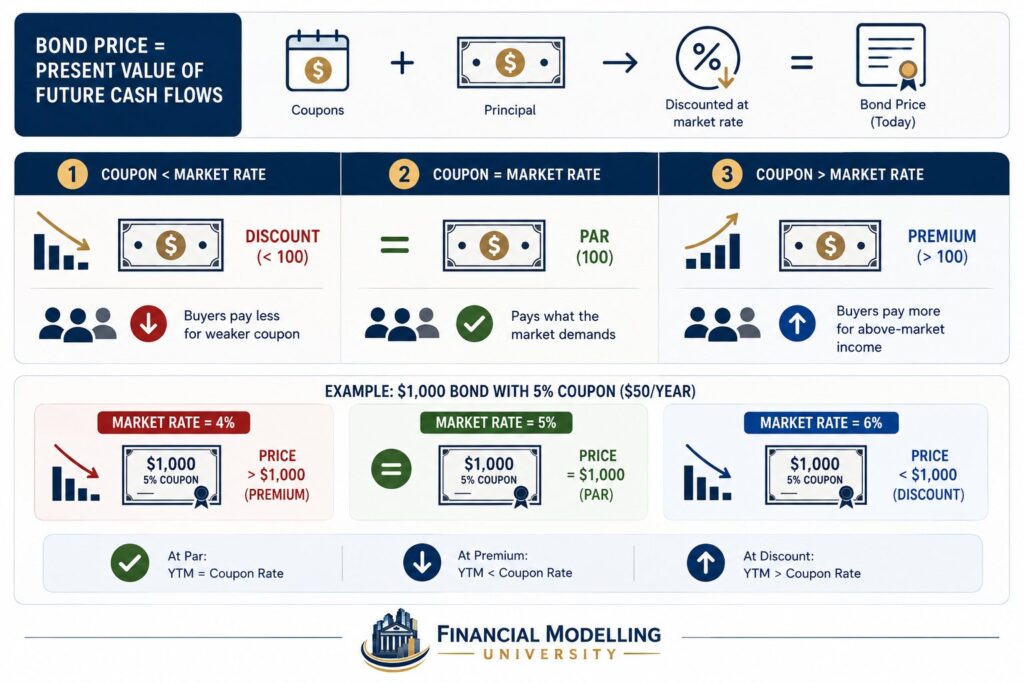
A quick example makes this concrete. A $1,000 bond with a 5% coupon pays $50 a year. If comparable bonds in the market also yield 5%, this bond is worth exactly $1,000. Raise market rates to 6% and that same $50 coupon looks weak next to what new bonds offer, so the price drops below $1,000 until the yield to maturity catches up to 6%. Drop market rates to 4% and the opposite happens: investors pay a premium for the more generous $50 coupon.
This is also why yield to maturity equals the coupon rate only for a bond priced at par. On premium or discount bonds, part of the return comes from the price converging toward face value at maturity, not just from the coupon itself.
Anyone building a par bond valuation model will recognize this as the same present value logic used across financial modeling, whether it’s discounting a bond’s cash flows or a company’s; our DCF & Valuation course walks through the underlying present value mechanics in more depth.
Par pricing is common at issuance. Underwriters typically set a new bond’s coupon close to the going market rate specifically so it sells near 100, which keeps the deal simple for both issuer and buyer.
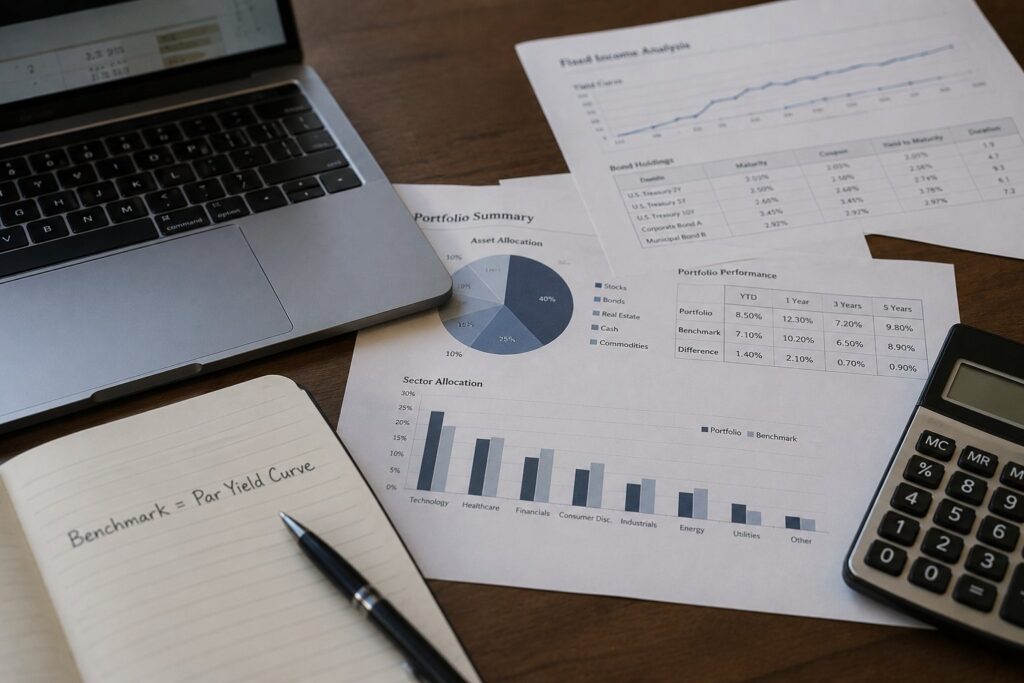
U.S. Treasury auctions are a good real-world example: new notes and bonds are priced to land close to par at the auction, and the Treasury’s own daily rate benchmark is officially called a par yield curve. That curve plots the hypothetical coupon rate a new Treasury security would need at each maturity to price exactly at par today, and it’s the reference point the entire fixed-income market uses to gauge relative value.
Once a bond starts trading in the secondary market, staying at par is the exception, not the rule. Interest rates shift daily, so within days or weeks a bond typically drifts to a discount or premium. This is a meaningful gap left out of most explanations of par bonds: par is less a resting state and more a snapshot, one moment where a bond’s fixed coupon happens to match a moving target.
One practical detail that rarely gets covered: buying a bond at par has accounting and tax advantages over buying at a premium or discount. A bond purchased at a premium usually requires amortizing that premium over the bond’s remaining life, which reduces the investor’s taxable interest income and cost basis year by year.
A bond bought at a discount often involves accreting that discount, which can create taxable income even before the investor receives any cash. A par bond purchase avoids both adjustments. The coupon received each year is simply the taxable interest, and the amount returned at maturity matches the original purchase price, with no gain or loss to calculate.
For investors who value simplicity in their portfolio bookkeeping, this is a real, if underappreciated, reason to favor par or near-par bonds when building fixed-income allocations, something worth weighing alongside the broader planning covered in our guide to private wealth management.
Beyond the tax mechanics, par bonds serve a specific role for income-focused investors. Because the coupon rate and yield to maturity are identical at par, these bonds offer the clearest possible read on expected return without needing to model price convergence.
They’re also useful benchmarks: portfolio managers frequently compare a bond’s current yield against the par yield curve for its maturity to judge whether it’s cheap or expensive relative to where a brand-new issue would price today.
Callable bonds add a wrinkle worth flagging. As a callable bond’s price rises toward its call price, which is often at or near par, it tends to be “pulled” back toward par bond because the market prices in the likelihood the issuer redeems it early rather than letting it trade meaningfully above the call price.
This means bonds with call features can behave like par bonds even when general market rates would otherwise justify a premium.
Fixed income is just one piece of building models that hold up under scrutiny. If you want the full toolkit for pricing, valuing, and presenting deals like this, explore our financial modeling courses.
A par bond is simply the point where a fixed coupon and a moving market rate happen to agree, and that alignment is temporary by nature. Knowing why a par bond sits at, above, or below par gives you a faster read on interest rate direction, yield expectations, and even the tax mechanics of a fixed-income position than the price alone ever will.
Want to turn concepts like this into deal-ready models? Start learning with Financial Modelling University and build the same valuation skills used by analysts at top investment banks and private equity firms.