


Every deal memo, credit agreement, and M&A model has one metric in common: EBITDA. Analysts use it to price acquisitions, set debt covenants, and benchmark performance across entire industries.
The EV/EBITDA multiple is the most widely used valuation ratio in comparable company analysis, with sector averages ranging from roughly 7x in traditional industries to over 28x in software. Yet many people who use the term daily cannot explain why depreciation gets added back, or when the metric quietly misleads.
We will now explain what EBITDA is, how to calculate it two ways, how it flows into valuation, and where it breaks down.
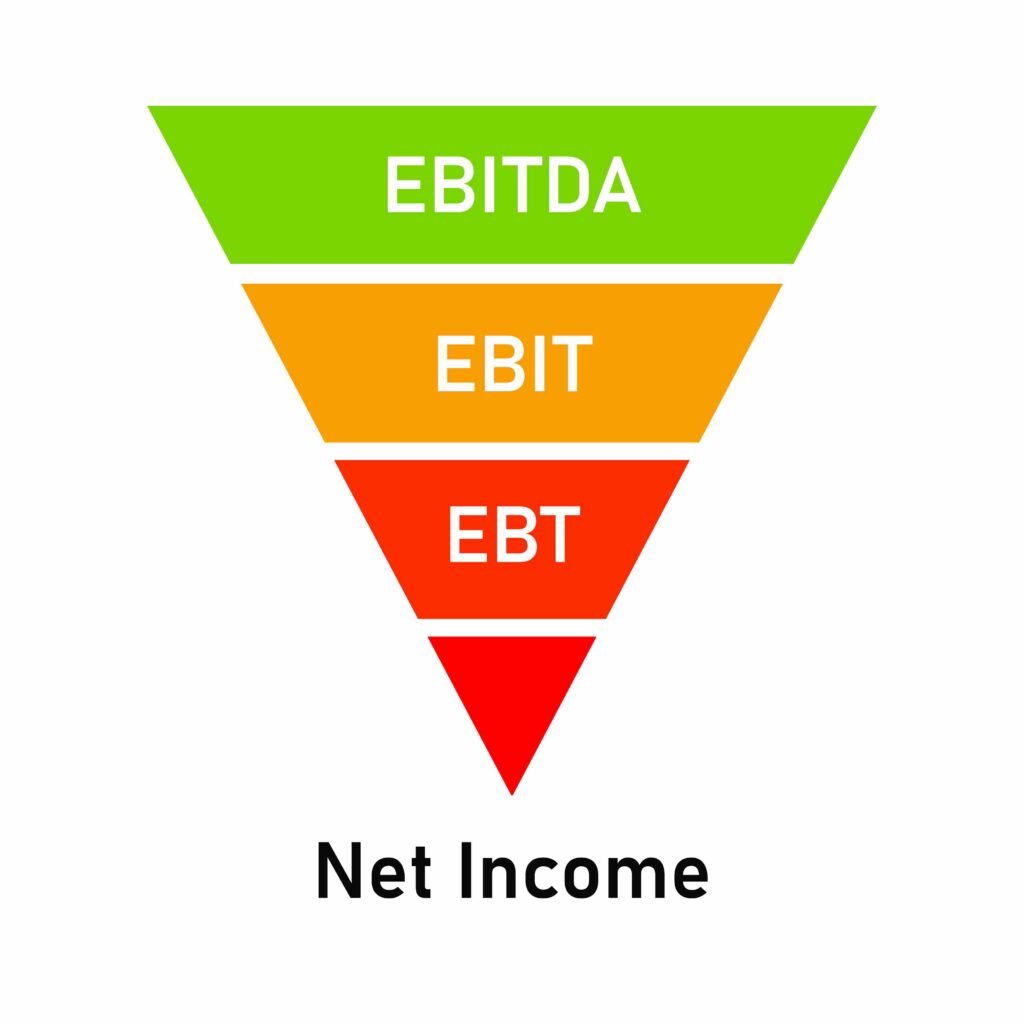
EBITDA stands for Earnings Before Interest, Taxes, Depreciation, and Amortization.
It measures a company’s operating profitability before the impact of financing decisions, tax environments, and non-cash accounting charges. The goal is comparability. Two companies in the same industry may carry very different debt loads, operate in different tax jurisdictions, or have made different accounting choices around asset depreciation. EBITDA strips those differences out, leaving a cleaner view of core operating performance.
It is a non-GAAP (and non-IFRS) metric. Companies calculate and disclose it voluntarily, which matters when you get to the limitations section below.

It can be calculated starting from two different points on the income statement. Both arrive at the same result.
| Approach | Formula |
| Top-down (from EBIT) | EBITDA = EBIT + Depreciation + Amortization |
| Bottom-up (from Net Income) | EBITDA = Net Income + Interest + Taxes + Depreciation + Amortization |
When to use which: The top-down approach is faster when EBIT is readily available on the income statement. The bottom-up approach is standard when building a financial model from scratch, since it starts from net income and adds back each excluded item individually. Depreciation and amortization figures should ideally be sourced from the cash flow statement or supporting disclosures to ensure accuracy.
Consider a fictional company, Nordhaven Industrial, with the following annual financials:
| Line Item | Amount |
| Revenue | $50,000,000 |
| Net Income | $4,200,000 |
| Interest Expense | $800,000 |
| Tax Expense | $1,400,000 |
| Depreciation & Amortization | $2,600,000 |
| EBITDA | $9,000,000 |
Using the bottom-up formula: $4,200,000 + $800,000 + $1,400,000 + $2,600,000 = $9,000,000
Using the top-down formula: EBIT = Net Income + Interest + Taxes = $6,400,000. Then add Depreciation to EBIT $6,400,000 + $2,600,000 = $9,000,000
Same result, different starting point.
Beyond being a profitability metric, EBITDA serves as the denominator in the most widely used valuation multiple in practice: EV/EBITDA.

Enterprise Value (EV) represents the total value of a business, typically calculated as market capitalisation/Equity Value plus net debt (and, where relevant, minority interest and preferred equity). Dividing EV by EBITDA tells you how many times EBITDA an acquirer is paying for the business.
EV/EBITDA = Enterprise Value / EBITDA
It is capital structure-neutral, which makes it far more useful for cross-company comparisons than the price-to-earnings (P/E) ratio. EV/EBITDA is the go-to metric in comparable company analysis (comps), leveraged buyout (LBO) models, and M&A due diligence.
Benchmark ranges to know:
| Context | Typical EV/EBITDA Range |
| Private companies | 4x – 7x |
| Public companies (broad market) | 8x – 14x |
| Technology / software | 15x – 30x+ |
| Capital-intensive industrials | 5x – 9x |
[/su_table]
These are directional benchmarks, not rules. Always compare within the same industry and time period.
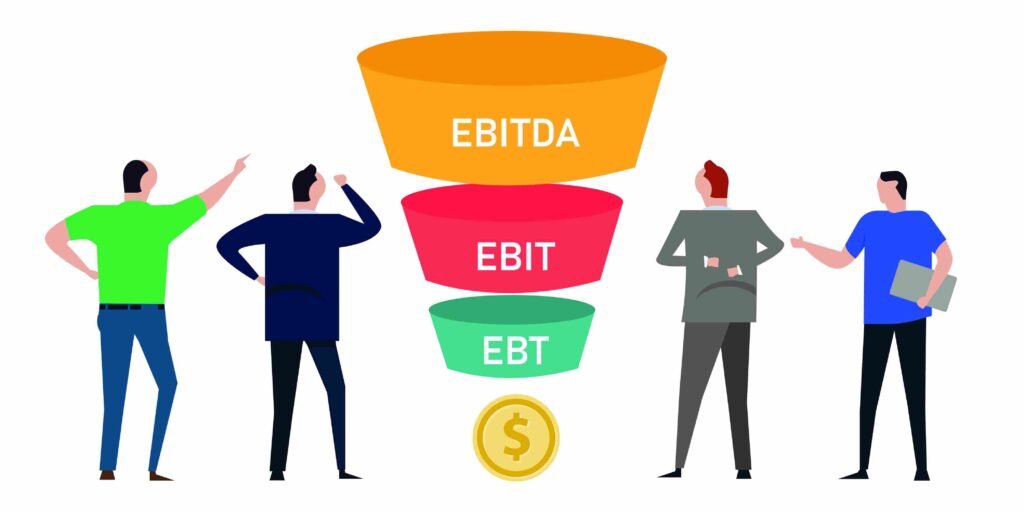
One distinction that rarely appears in basic EBITDA guides is which EBITDA analysts actually use in valuation.
Using the wrong time period in a comparable company analysis produces misleading multiples. If your comps use NTM and your target company uses LTM, the comparison is not valid.

Lenders frequently use EBITDA as the denominator in leverage ratios, the most common being Total Debt / EBITDA. In many cases, ratios around 3x–4x may be consistent with investment-grade profiles, depending on the sector, stability of cash flows, and lender criteria.
Covenant thresholds are often set relative to EBITDA, which is why the metric appears directly in loan agreements and bond indentures.
EBITDA margin expresses EBITDA as a percentage of revenue.
EBITDA Margin = EBITDA / Revenue
Using the Nordhaven example above: $9,000,000 / $50,000,000 = 18% EBITDA margin
Margins vary significantly by industry. Software businesses can run EBITDA margins above 30%. Grocery retailers may run at 4–6%. Comparing margins only makes sense within the same sector.

This is useful precisely because it simplifies. That simplification also makes it easy to abuse. Here is where analysts should apply extra scrutiny:
EBIT (Earnings Before Interest and Taxes) is simply EBITDA minus depreciation and amortization. For capital-light businesses, the difference is small. For capital-intensive companies, it is large. Analysts working in sectors like infrastructure, heavy manufacturing, or oil and gas often prefer EBIT because it better reflects the real cost of using physical assets.
This is a powerful tool for comparing operating performance across companies with different capital structures, tax environments, and accounting policies. In valuation, EV/EBITDA is the standard comparable company metric. Knowing whether you are working with LTM or NTM EBITDA, and why it matters, separates analysts who use the metric correctly from those who do not.
Understanding the formula is the first step. Knowing when EBITDA is an appropriate proxy and when it materially distorts economic reality is what differentiates strong analysts.
Want to go deeper? At Financial Modelling University, our courses cover EBITDA in the full context of financial modelling, including how to build LBO models, run comparable company analysis, and stress-test valuation assumptions the way practitioners do. Explore the courses here.